The practical guide
Sewing machine or serger?
A sewing machine handles everyday construction and repairs. A serger trims and finishes edges. Compare their jobs before buying a second machine.
Find your machine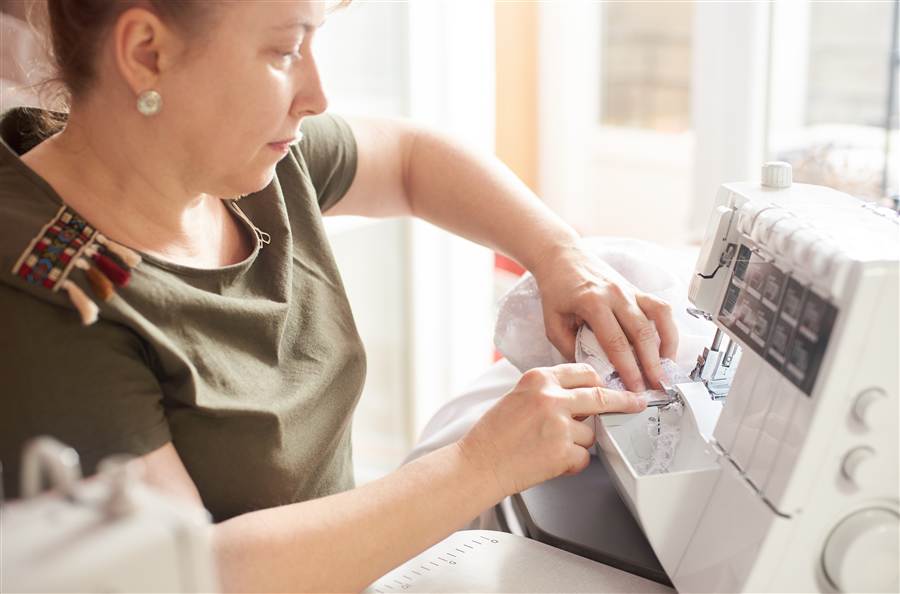
Everyday sewing first. Edge finishing when you need it.
The first-machine decision
If you own neither, start with a sewing machine for repairs, bags, quilts, and most clothing construction. Add a serger when finishing lots of seams becomes a regular part of your sewing. A serger is a useful companion to a sewing machine; it does not replace its full range of jobs.
What each machine actually does
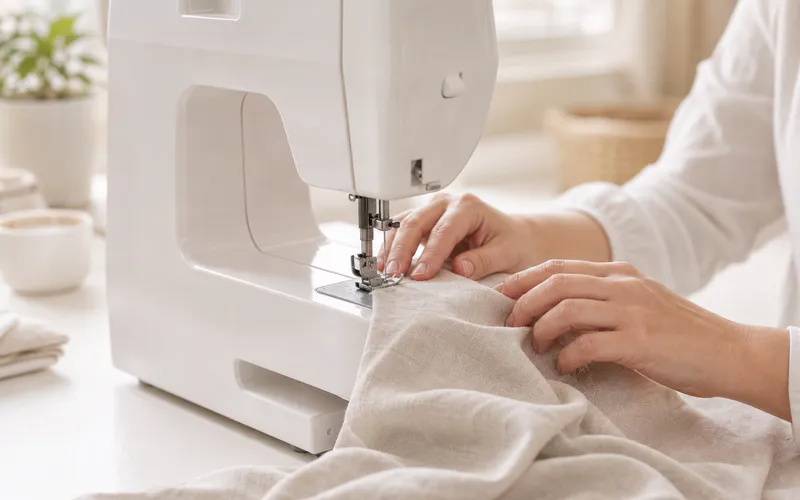
| Job | Sewing machine | Serger |
|---|---|---|
| Straight seams and topstitching | Yes, including stitching away from an edge. | Primarily forms overlock seams at the fabric edge. |
| Finish a raw edge | Zigzag or overcasting stitches, depending on the model; trim separately. | Can trim the edge and wrap it in thread in one pass. |
| Zippers and buttonholes | Use the appropriate stitch and foot; check the model's features. | A basic serger does not replace these sewing-machine functions. |
| Stretchy seams | Use a suitable zigzag or stretch stitch and needle. | Overlock seams and differential feed can help with knit construction. |
| A T-shirt-style coverstitched hem | A compatible twin needle can approximate the appearance; test stretch. | A basic 3/4-thread serger does not make a true coverstitch. |
Coverstitch machines are a separate category. Some specialist combination machines offer both functions, but a listing that says “serger” alone is not evidence that it can coverstitch.
You can sew knits without a serger
For occasional stretchy projects, try the sewing machine you already own. Use the stitch and needle recommended for your fabric, then test on scraps cut in the same direction as your project. Stretch the sample gently to see whether the seam survives without popped stitches.
If the edge ripples, reduce how much you stretch the fabric while guiding it and check the machine's manual for suitable adjustments. A serger's differential feed moves fabric through at different rates to help manage stretching or gathering; the right setting still depends on the fabric.
On a serger, the knife can remove fabric as you sew. Practice seam allowance and corners on scraps first. Keep pins out of the knife and needle path, and disconnect power before changing needles or cleaning as directed by the manual.
Match the purchase to your next projects
First machine: Brother CS7000X
A computerized sewing option for everyday construction with speed control, ordinary sewing stitches, and a wide table. Choose it if you need one machine to learn seams, buttonholes, and quilting basics.
It does not trim raw edges like a serger. Compare it with simpler dial machines in our beginner sewing machine guide.
Check CS7000X on AmazonSeam-finishing companion: Brother 1034D
A 3/4-thread serger with differential feed for finishing edges and constructing suitable seams. Consider it when garments or repeated edge finishing justify a second machine.
It uses manual threading, so allow time to learn the thread paths. It is not a coverstitch machine. The serger guide explains the main terms and alternatives.
Check 1034D on AmazonBefore ordering a second machine
- Count the real setup cost. Allow for suitable thread, needles, table space, and practice fabric. Check which accessories the exact listing includes.
- Try threading yourself. Ask for a demonstration if several thread paths look difficult to manage. Air threading can help with loopers on equipped models, but it does not automate every setup step.
- Check service and returns. A nearby dealer can be worth considering when lessons and repairs matter more than the lowest initial cost.
Still choosing ordinary sewing controls? Read computerized versus mechanical sewing machines.
Specifications and manuals
Check the manufacturer’s model details and included accessories:
Our recommendations use published information, not hands-on testing. How we evaluate machines. Report a correction.