Stitch Selector
The dial or buttons used to choose the stitch the machine will make.
A good home machine should match your projects, your controls, and the fabric you use most. Start with the job, then compare features.
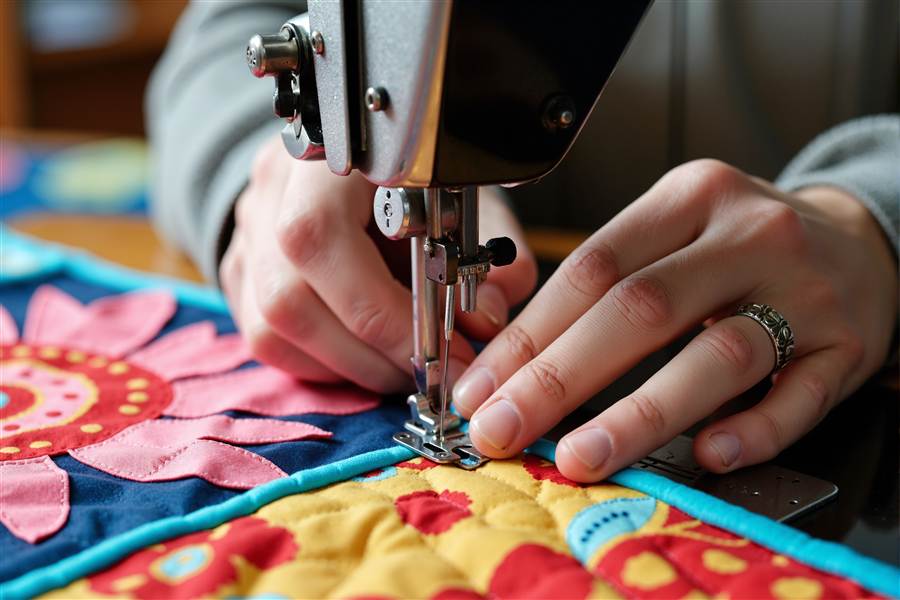
The dial or buttons used to choose the stitch the machine will make.
The small piece that holds fabric flat near the needle while you sew.
The small metal teeth under the foot that pull fabric through the machine.
A finished opening for a button. Some machines make it in one step.
| Model | What it is | Where to buy |
|---|---|---|
| XM2701 | Simple starter with 27 stitches and dial controls. | See at Amazon → |
| CS7000X | Computerized all-rounder with speed control and a wide table. | See at Amazon → |
| XR9550 | Computerized step-up with lettering and a wide table. | See at Amazon → |
| PQ1600S | Fast straight-stitch machine with room for quilts. | See at Amazon → |
Amazon links go to the exact base model, never a search page or a bundle. Store details can change, so check the listing before you order.
Compare button controls with a simple dial.
Compare simple controls with room to grow.
See what matters for denim, canvas, and thick seams.
Learn how fabric room and feeding change the fit.
See machines made for names and stitched designs.
A home machine can sew many denim and canvas projects, but it still has limits on thick seams and dense material.
An industrial machine is built for one main job and often needs dealer setup and service.
We check machine facts against its manual.
We match the machine to fabric and sewing jobs.
We explain what each dial, button, and feature changes.
We say when a machine is not built for the job.